
Rotator cuff surgery recovery takes 4 to 6 months for most patients to return to daily activities, and up to 12 months to regain full strength. Physical therapy typically begins 4 to 6 weeks after surgery once the initial healing phase is complete. The sling phase is the hardest stretch — but consistent rehabilitation after that is what determines how fully you get your shoulder back.
The shoulder is one of those joints you do not fully appreciate until it stops working properly.
Reaching for a cup. Getting dressed in the morning. Sleeping on your side. Lifting a bag of groceries. These are things most of us do without thinking — until a rotator cuff injury makes every one of them painful, difficult, or impossible.
For many patients in Bremerton and across Kitsap County, rotator cuff surgery comes after months or years of managing shoulder pain conservatively — cortisone injections, rest, limited activity. By the time surgery is on the table, the frustration is real. You just want your shoulder back.
The good news is that most people do get it back. But rotator cuff recovery is not a passive process. It takes time, the right rehabilitation at the right pace, and a PT team that understands both the biology of tendon healing and the practical reality of what you need your shoulder to do in your daily life.
Here is what the recovery actually looks like — honestly and practically.
Table of Contents
What Is Rotator Cuff Surgery and Why Does Recovery Take Months?
The rotator cuff is a group of four muscles and their tendons that wrap around the shoulder joint, stabilising the ball in the socket and powering rotation and lifting. When one or more of those tendons tears — from an injury, a fall, or years of wear — surgery is sometimes the right option to repair it.
Most repairs are done arthroscopically, through small incisions using a camera, which reduces trauma to surrounding tissue and speeds up the early recovery. The repaired tendon is reattached to bone using small anchors during surgery.
The reason recovery takes months rather than weeks is straightforward biology. That reattached tendon has to grow back into the bone — a process called tendon-to-bone healing that takes a minimum of 10 to 12 weeks. During that window, the repair is at risk. Move too aggressively too soon and the tendon can pull away from the bone before it has had time to integrate.
That is why the early phase of recovery feels so slow and restricted. It is not excessive caution — it is the biology of healing setting the pace.
When Does Physical Therapy Start After Rotator Cuff Surgery?
For most rotator cuff repairs, formal physical therapy begins 4 to 6 weeks after surgery. Before that, the arm is kept in a sling and movement is restricted. Some surgeons permit very gentle pendulum exercises from early on — small, gravity-assisted movements that keep fluid circulating in the joint without loading the repair.
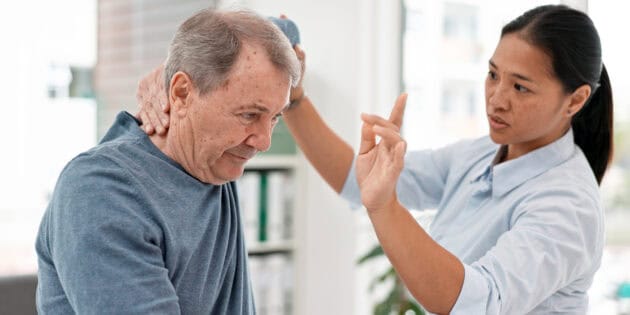
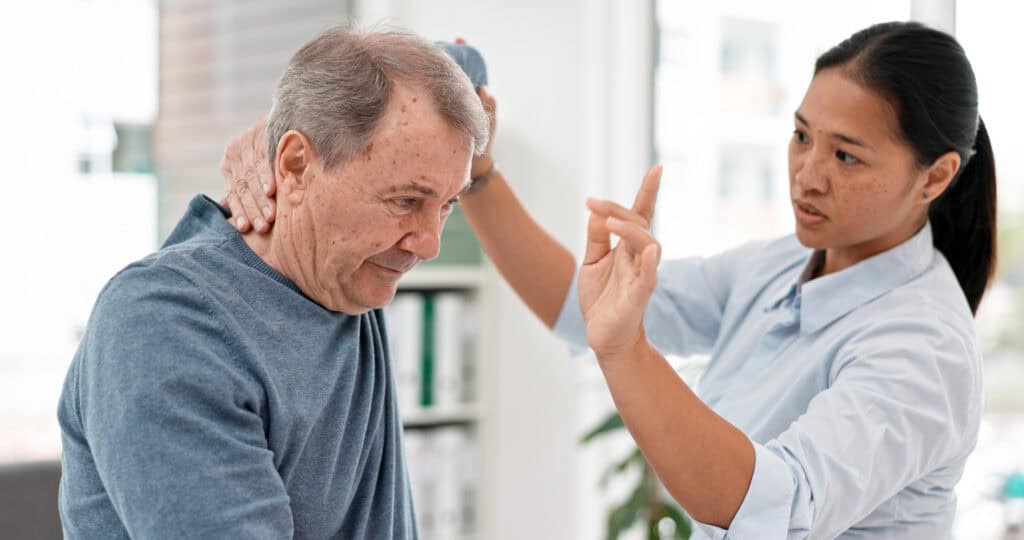
When PT does begin, the early work is passive — meaning your arm moves, but the repaired muscles are not yet doing the work. Your PT guides the movement. Active strengthening comes later, once the tendon has healed enough to tolerate it.
Once you are cleared for outpatient PT in Bremerton, that is where Intecore takes over from the hospital team and guides you through the rest of your recovery.
Rotator Cuff Surgery Recovery Phase by Phase
Rotator cuff recovery moves through four phases, each with a distinct goal. Understanding what each phase is trying to achieve makes the slow parts easier to tolerate and helps you know when it is right to push harder.
Phase 1 — Weeks 1 to 6: Protecting the Repair
The arm stays in a sling. Pain and swelling are managed with ice and medication. The only goal at this stage is protecting the repair while it begins to heal.
You can move your elbow, wrist, and fingers. You can do gentle pendulum exercises if your surgeon has cleared them. What you cannot do is use the arm to lift, push, pull, or reach — in any direction. Patients who ignore these restrictions during phase one are the ones who end up with re-tears and return trips to the operating room.
This phase tests patience more than anything else. The discomfort of doing very little is real. But this is the most important phase of the whole recovery — get it right here and everything that follows is easier.
Phase 2 — Weeks 6 to 12: Getting the Shoulder Moving Again
This is when formal PT begins. The sling comes off or is worn only at night. The focus is entirely on restoring range of motion — getting the shoulder moving through its full range comfortably, without compensation or pain.
Your PT will use hands-on manual therapy to release joint stiffness and manage scar tissue, alongside guided stretching and carefully progressed movement exercises. Strengthening is still off the table at this stage. The tendon is not ready for loading yet.
Goals by week 12: full or near-full passive range of motion in all directions, reduced pain during daily tasks, and the ability to use the arm for light activities below shoulder height — making a cup of tea, getting dressed without assistance, managing personal care independently.
Phase 3 — Weeks 12 to 20: Building Strength and Stability
The tendon has healed enough to start loading. This is where the real work begins and where most patients start to feel like progress is meaningful and visible.
Rotator cuff strengthening, scapular stability work, and functional movement patterns are the foundation of this phase. For patients in Kitsap County, this is the phase where we start rebuilding the shoulder for what matters in your daily life — carrying shopping bags, reaching overhead in the kitchen, managing yard work, lifting grandchildren safely.
Two to three PT sessions per week plus a home exercise program is standard. Consistency here is the single biggest factor in how strong the shoulder gets. The patients who do their home exercises between sessions consistently outperform those who rely on clinic time alone.
Phase 4 — Months 5 to 12: Return to Full Activity
The final phase is about returning to everything your shoulder needs to do in your life. For most of our Bremerton patients that means full use of the arm for daily tasks, gardening, walking the dog without discomfort, driving without restriction, and managing their home without needing to ask for help.
Most patients are cleared for light unrestricted use by month four to five. Full recovery — where the shoulder feels genuinely strong and capable again — typically takes nine to twelve months. That timeline is long, but patients who stay engaged with their rehab through to the end consistently reach better outcomes than those who stop when they feel good enough.
How Long Is Rehab for Rotator Cuff Surgery?
Formal outpatient physical therapy typically runs 3 to 4 months, attending two to three times per week. Some patients benefit from a longer program — particularly those with larger tears, significant pre-surgical weakness, or who want to return to more physically demanding activities.
Medicare covers outpatient physical therapy after rotator cuff surgery. Coverage limits and copay amounts vary by plan — our team at Intecore can help you understand your benefits before you begin.
The total journey from surgery to full recovery is 6 to 12 months for most patients. Cutting the rehabilitation process short is one of the primary reasons people end up with persistent weakness or stiffness long after surgery. Completing the program matters.
What Does Rotator Cuff Rehabilitation Actually Involve?
A well-designed rotator cuff rehab program is built around your specific repair, your current function, and what your shoulder needs to do in your daily life. Here is what the core work looks like at Intecore.
- Manual therapy: Hands-on joint mobilisation, soft tissue work, and scar tissue management to restore mobility faster than exercise alone.
- Range of motion work: Carefully progressed passive and active movement to restore the shoulder’s full range without overloading the healing tendon.
- Rotator cuff strengthening: Targeted exercises for the four rotator cuff muscles, progressed based on healing stage and what the shoulder tolerates.
- Scapular stabilisation: The shoulder blade is the foundation the shoulder moves off. Weak scapular muscles mean poor mechanics and unnecessary stress on the repair. This is a critical and often undertreated part of shoulder rehab.
- Functional activity training: In the later phases, exercises are matched to what you actually need your shoulder to do — reaching overhead in the kitchen, carrying groceries, managing your home and garden.
- Home exercise program: We build a realistic home program and progress it as you improve. What happens between sessions is just as important as what happens in the clinic.
Does Tear Size Affect Recovery Time?
Yes. The size and complexity of the tear has a direct impact on how long recovery takes and what outcomes are realistic.
- Small to medium tear (less than 3cm): Return to most daily activities by 4 to 5 months. Full recovery typically 6 to 9 months.
- Large tear (3 to 5cm): Return to daily activities by 5 to 6 months. Full recovery 9 to 12 months.
- Massive tear (greater than 5cm): Recovery is longer and outcomes more variable. Full recovery can take 12 months or more depending on tissue quality and the complexity of the repair.
Your surgeon should have given you a sense of tear size after the procedure. If you are not sure what category your tear falls into, ask — it shapes what a realistic recovery timeline looks like for you specifically.
Shoulder Rehabilitation in Bremerton, Silverdale, and Port Orchard
At Intecore Physical Therapy in Bremerton, rotator cuff rehabilitation is one of the procedures we have the deepest experience with. We have helped patients across Kitsap County recover from small repairs and complex reconstructions alike — getting back to the daily life they want to be living.
We know that for most of our patients, the goal is not particularly dramatic. It is getting dressed without pain. Sleeping through the night. Reaching for things without thinking twice. Managing your home and your life without the shoulder being a constant limitation.
That is exactly what good rotator cuff rehabilitation achieves — and we would love to be part of your recovery.
Fill out our quick inquiry form at intecore-pt.com/inquire or call us at 360-474-3274. We are here to help.
Frequently Asked Questions
Sources
JOSPT — Rotator Cuff Rehab Guidelines https://www.jospt.org/doi/10.2519/jospt.2018.0302
AAOS — Rotator Cuff Tears https://orthoinfo.aaos.org/en/diseases–conditions/rotator-cuff-tears/
NIH — Outcomes After Rotator Cuff Repair https://pubmed.ncbi.nlm.nih.gov/27517806/
Mayo Clinic — Rotator Cuff Injury https://www.mayoclinic.org/diseases-conditions/rotator-cuff-injury/symptoms-causes/syc-20350225
APTA — Shoulder Clinical Practice Guidelines https://www.apta.org/patient-care/evidence-based-practice-resources/cpg/shoulder-pain

- Frozen Shoulder and Rainy Weather: What’s Really Making Your Shoulder Worse This Fall - September 22, 2026
- ACL Injury Prevention for Teen Soccer Players: What Kitsap County Parents Should Know This Fall - September 2, 2026
- Warning: The Knee Surgery Many Kitsap Patients Get May Leave Them Worse Off - July 16, 2026