
Full knee replacement recovery takes 3 to 6 months for most daily activities, and up to 12 months to feel completely back to normal. Physical therapy typically starts within 24 hours of surgery and continues for 6 to 8 weeks of formal outpatient care. The patients who recover best are the ones who stay consistent with their PT program and keep moving — even on the days when it feels like hard work.
If you are preparing for knee replacement surgery — or you have recently had one — you are probably carrying a lot of questions along with the discomfort.
When will I be able to walk to the mailbox without pain? When can I drive myself to appointments again? Will I be able to get down on the floor with my grandkids? How long is this whole process actually going to take?
These are the questions I hear most from patients who come to see us here in Bremerton. And I want to give you honest, straightforward answers — not the vague “everyone is different” response that leaves you more uncertain than when you started.
Spring is finally here in the Pacific Northwest, and for a lot of people that matters. After months of grey skies and staying indoors, there is a real pull to get outside, move around, and feel like yourself again. Knee replacement recovery, done right, can get you there. But it takes a plan, consistency, and the right support.
Here is what recovery actually looks like, week by week.
Table of Contents
What Is Knee Replacement Surgery, and Why Does Recovery Take the Time It Does?
A total knee replacement removes the damaged surfaces of your knee joint and replaces them with metal and plastic components. Your surgeon has essentially rebuilt the joint. That is a significant thing your body has been through — and it needs time, patience, and the right rehabilitation to heal properly.
The surrounding muscles, tendons, and soft tissue all need to recover alongside the joint itself. Your nervous system needs to relearn how to move that knee safely and confidently. Physical therapy guides every part of that process — it is not optional, and it is not something to rush through.
If you had a partial knee replacement (unicompartmental), your recovery will generally be faster — most patients are moving much more comfortably by 6 to 10 weeks because less of the joint was replaced and more natural tissue was preserved.
When Does Physical Therapy Start After Knee Replacement?
This surprises almost everyone: physical therapy starts the same day as surgery or the morning after. While you are still in the hospital, a PT will get you on your feet, help you take your first steps, and begin basic movement work.
Early movement is not about pushing too hard too soon. It is about preventing blood clots, reducing swelling faster, and starting to signal to your muscles that they still have a job to do. The research is clear on this — patients who move early recover better than those who stay in bed waiting for the pain to pass.
Once you are home, most patients transition to outpatient physical therapy within the first one to two weeks. If you are in Bremerton, Silverdale, or Port Orchard, that is where Intecore comes in. We take over from the hospital team and guide you through the rest of your recovery.
Knee Replacement Recovery Week by Week: What to Realistically Expect
Every patient heals at their own pace, but here is a realistic picture of what most people go through. Use this as a guide — not a strict schedule to measure yourself against.
Weeks 1 to 2: Managing Pain and Getting on Your Feet
The first two weeks are the hardest — not because you are not making progress, but because the progress is happening inside the joint where you cannot see it. Pain and swelling are significant. Sleep is disrupted. You will likely need a walker or crutches to get around.
PT goals at this stage are modest but important: getting the knee to at least 90 degrees of bend, achieving full straightening (extension), and doing basic exercises like quad sets and heel slides. These feel simple, but they are laying the foundation for everything that comes later.
The most important thing you can do in weeks one and two is manage swelling — ice, elevation, and gentle movement. Do not skip your exercises because they feel uncomfortable. Discomfort is expected. Sharp, worsening pain is worth a call to your surgeon.
Weeks 3 to 6: Building Strength and Moving More Independently
This is where most patients start to feel genuine progress. Pain is still present but becoming more manageable. Many people transition from a walker to a cane during this period — and some are walking unassisted by week five or six.
Outpatient PT is central to this phase. At Intecore, we focus heavily on rebuilding quad strength during weeks three to six — because a weak quad is the single biggest factor in a slow, difficult recovery. We also work on balance, gait mechanics, and building the confidence to move around your home and community safely.
For patients in their 60s, 70s, and 80s — which is many of the people we see in Kitsap County — this is also the phase where we pay close attention to fall risk. Getting stronger is important. Getting stronger safely is everything.
Weeks 6 to 12: Getting Back to Daily Life
By week six, most patients are sleeping better, walking more steadily, and starting to recognize glimpses of their normal life returning. Walking to the kitchen without thinking about it. Getting in and out of the car more easily. Navigating a grocery store without exhaustion.
Driving is typically cleared around 4 to 6 weeks for a right knee replacement, and sooner for the left knee if you drive an automatic. This is a big milestone for independence — especially for patients managing their own appointments and daily errands.
Most patients complete their formal PT program around the 8-week mark. By week 12, knee flexion is typically 110 to 120 degrees — enough for stairs, getting in and out of chairs, and most daily activities.
Months 3 to 6: Rebuilding Confidence and Getting Outside
This is the stretch where life starts to feel genuinely good again. Swelling continues to decrease. Strength and endurance improve month by month. Patients who have stayed consistent with their home exercise program during this phase often surprise themselves with what they are able to do.
Walking longer distances. Working in the garden. Taking a slow walk along the waterfront. Getting to community events. These are the things our Bremerton patients tell us matter most — not athletic records, just the ordinary freedom of moving through their lives without constant pain.
Low-impact activities like swimming and cycling are typically cleared during this period. Some patients feel fully recovered by month three. Others — particularly those who had significant pain and stiffness for years before surgery — take closer to six months. Both are completely normal.
How Long Does Physical Therapy Last After Knee Replacement?
Formal outpatient physical therapy typically runs 6 to 8 weeks, with sessions two to three times per week — roughly 12 to 24 visits in total. Medicare covers outpatient PT after knee replacement, though session limits and copays vary by plan. If you are unsure about your coverage, our team can help you figure that out before you start.
Beyond formal PT, your home exercise program is just as important. The patients who recover fastest are the ones doing their exercises between sessions, not just showing up to the clinic and coasting in between.
Does Age Affect Knee Replacement Recovery Time?
This is the question most of our Bremerton patients want answered. And the honest answer is — yes, age plays a role, but it is rarely the deciding factor.
What matters more than age is your overall strength and fitness going into surgery, how consistently you do your PT and home exercises, your general health and whether other conditions are affecting healing, and your confidence and willingness to keep moving even when it feels hard.
A determined 74-year-old who commits to the process will recover better than a 60-year-old who skips sessions and avoids their exercises. We see this every week at our Bremerton clinic.
One thing that helps significantly regardless of age is pre-surgical physical therapy — sometimes called prehabilitation. Strengthening the muscles around your knee before surgery gives your body a better starting point. Research consistently shows that patients who complete pre-op PT recover faster, achieve better range of motion earlier, and often need less pain medication after surgery. If you are scheduled for knee replacement and have not started PT yet, it is not too late to benefit.
What Makes Post-Surgical Physical Therapy Actually Work?
Good PT after knee replacement is not just exercises on a sheet of paper. Here is what separates effective rehabilitation from going through the motions.
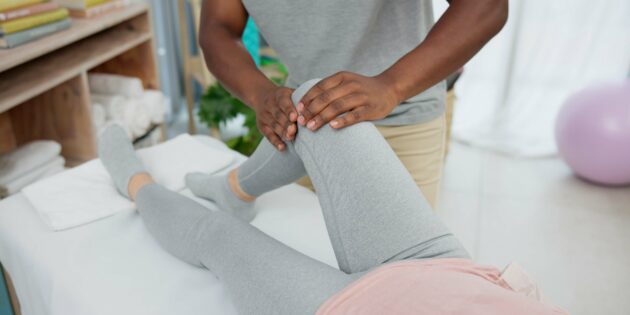
- Hands-on manual therapy: Soft tissue work, joint mobilization, and scar tissue management help restore movement and reduce stiffness more effectively than exercise alone.
- Progressive strengthening: Your quad, glute, and hip muscles need to be rebuilt carefully and systematically. A good PT knows when to push and when to hold back.
- Gait retraining: Many patients develop a limp or compensatory movement patterns after surgery. Correcting these early prevents them from becoming permanent habits.
- Fall prevention: For older adults, rebuilding balance and confidence is as important as rebuilding strength. We take this seriously at Intecore.
- A care team that listens: Your recovery is not a protocol — it is your life. A good PT team adjusts your program based on how you are actually doing, not just what the calendar says.
Recovering from Knee Replacement in Bremerton, Silverdale, or Port Orchard
At Intecore Physical Therapy in Bremerton, post-surgical rehabilitation is one of the things we do best. We have helped patients from across Kitsap County recover from knee replacements, hip replacements, rotator cuff repairs, spinal fusions, and more — getting back to the daily life they want to be living.
We know what a good recovery looks like at each stage. We know how to help when progress stalls. And we know that for most of our patients, the goal is not running a marathon — it is walking through the neighbourhood, keeping up with the grandkids, and moving through the day without pain holding them back.
Whether you are preparing for surgery and want to get ahead of it, or you are already post-op and want to make sure your recovery is on the right track, we are here to help.
Fill out our quick inquiry form at intecore-pt.com/inquire or call us at 360-474-3274. We will listen to where you are and tell you exactly how we can help.
Frequently Asked Questions
What is the full recovery time for a knee replacement?
Most patients are back to daily activities within 3 to 6 months. Full recovery — where the knee feels close to normal with minimal swelling and good strength — typically takes 9 to 12 months. Many patients feel significantly better well before the 12-month mark, particularly those who stay consistent with PT and home exercises.
When can I drive after knee replacement surgery?
For a right knee replacement, most surgeons clear driving around 4 to 6 weeks — once you can brake safely and are off narcotic pain medication. A left knee replacement generally allows a faster return to driving, often 2 to 3 weeks, if you drive an automatic transmission vehicle.
Does Medicare cover physical therapy after knee replacement?
Yes. Medicare covers outpatient physical therapy after knee replacement surgery. Coverage limits and copay amounts vary depending on your specific plan. Our team at Intecore can help you understand your coverage before you begin — just ask when you call or inquire online.
Is it normal for my knee to still hurt at 6 weeks post-op?
Yes, completely normal. At 6 weeks, most patients still have pain and swelling — especially after activity. The knee is still healing internally long after the incision looks fine on the outside. Staying consistent with PT and your home exercise program during this stage is the most important thing you can do.
How many physical therapy sessions will I need after knee replacement?
Most outpatient PT programs run 12 to 24 sessions over 6 to 8 weeks. Some patients benefit from additional sessions, particularly if they had significant weakness or stiffness before surgery. Your PT will monitor your progress and adjust accordingly.
Can I do physical therapy before my knee replacement surgery?
Yes — and we strongly recommend it. Pre-surgical PT (prehabilitation) strengthens the muscles around the knee before surgery, giving your body a better foundation to recover from. Research shows patients who complete pre-op PT recover faster and achieve better outcomes. If you are scheduled for surgery in the coming weeks or months, contact us to get started.
What is a partial knee replacement recovery timeline?
Partial knee replacement recovery is generally faster than total knee replacement. Most patients are walking without aids by 3 to 4 weeks and back to most daily activities by 6 to 10 weeks. Formal PT still plays an important role
Sources
American Academy of Orthopaedic Surgeons (AAOS) — Total Knee Replacement Recovery Guidelines
Journal of Orthopaedic & Sports Physical Therapy (JOSPT) — Post-Surgical Rehabilitation Protocols
Mayo Clinic — Knee Replacement Surgery Overview
American Physical Therapy Association (APTA) — Clinical Practice Guidelines for Knee Osteoarthritis

- Rotator Cuff Surgery Recovery: What Patients in Bremerton, Silverdale, and Port Orchard Need to Know - March 31, 2026
- Should You Do Physical Therapy Before Knee Surgery? What Bremerton Patients Need to Know - March 31, 2026
- Knee Replacement Recovery: What to Expect Week by Week (A Guide for Patients in Bremerton, Silverdale, and Port Orchard) - March 30, 2026